

Blog
Foldable Phones vs Traditional Smartphone: Which Should You Buy?

Foldable Phones vs Traditional Smartphones: Which Should You Buy?
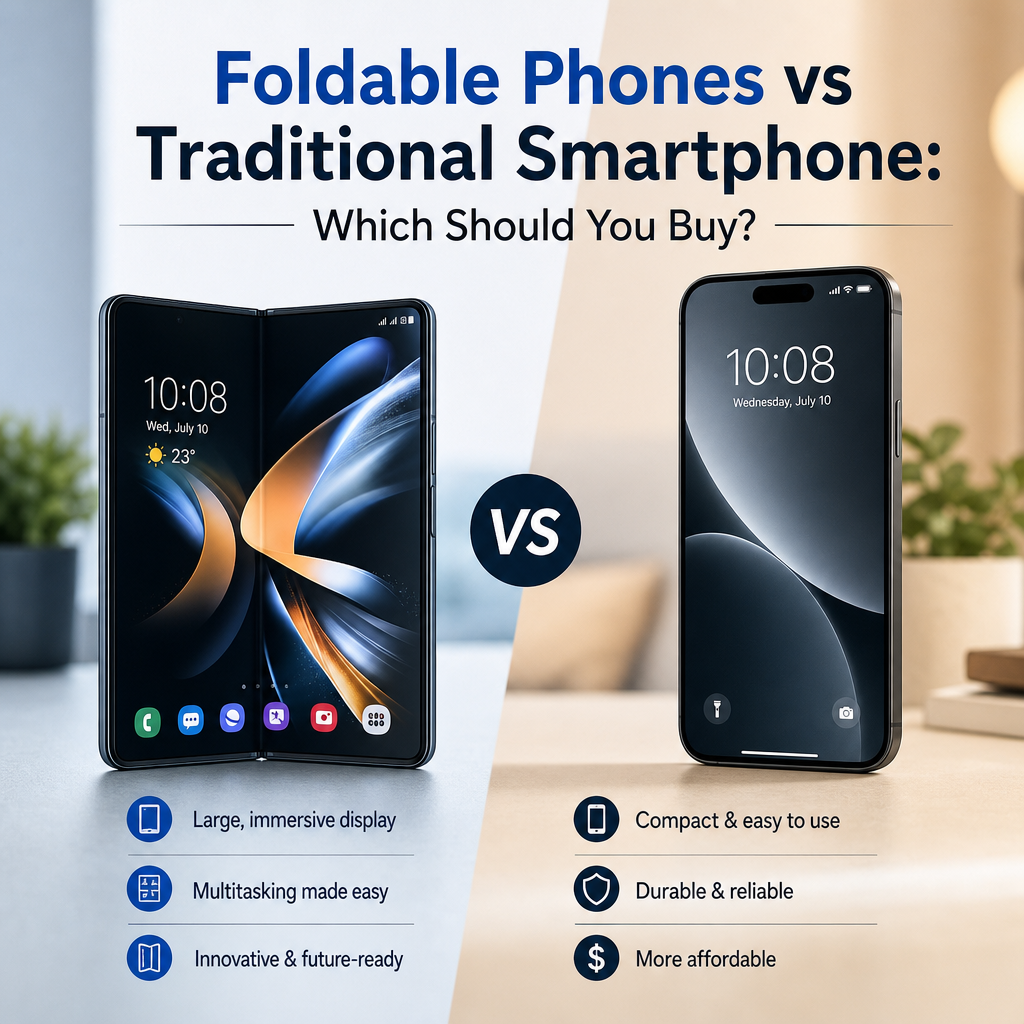
Foldable phones have gone from futuristic novelty to serious contenders in the smartphone market. At the same time, traditional slab phones still dominate for good reasons: they’re reliable, familiar, and often better value. If you’re deciding between foldable phones and a regular device, the right choice depends on how you use your phone every day.
Here’s a practical look at the foldable vs traditional smartphone debate, including design, durability, performance, and value.
What Makes Foldable Phones Different?
Foldable phones use flexible displays and hinges to open into larger screens or compact clamshell formats. Some unfold into mini-tablets, while others fold vertically like the classic flip phone.
The big appeal is obvious:
- More screen space in a pocket-friendly size
- Multitasking on a larger display
- A fresh, premium feel
- A compact design that stands out
For users who want something more versatile than a standard phone, foldables are exciting. But they also come with trade-offs.
Traditional Smartphones: The Safe, Proven Choice
Traditional smartphones, or slab phones, have a straightforward design: one solid screen, no hinge, and fewer moving parts. That simplicity still matters.
They usually offer:
- Better durability over time
- Lower repair risk
- Longer battery efficiency in many cases
- More affordable pricing across all tiers
- Wider selection of accessories and cases
For most buyers, a traditional smartphone is still the most practical option. It’s the device style most people know, and it tends to be easier to live with.
Foldable Phones vs Traditional Smartphone: The Key Differences
When comparing foldable phones to traditional models, it helps to focus on how they perform in real life rather than just on spec sheets.
1. Screen Experience
Foldables win on screen flexibility. A larger internal display is great for:
- Watching videos
- Reading
- Split-screen multitasking
- Gaming on a bigger canvas
Traditional phones, however, still offer excellent displays, often with higher brightness, sharper panels, and fewer compromises. If you mostly scroll social media, text, and browse the web, a slab phone may be more than enough.
2. Portability
This is where the flip phone vs slab phone conversation gets interesting.
A flip-style foldable can be easier to carry in a pocket or small bag when closed. A larger book-style foldable gives you more screen but usually adds thickness and weight.
Traditional smartphones may not fold, but they’re often slimmer and simpler to handle. If you want a phone that feels light and low-maintenance, the standard design still has an edge.
3. Durability
Durability is one of the biggest concerns in any phone durability comparison.
Traditional smartphones generally last longer without mechanical issues because there’s no hinge and no folding display stress. Foldables have improved a lot, but they still face challenges such as:
- Hinge wear over time
- Crease visibility
- More complex internal components
- Higher repair costs
Many newer foldables are stronger than earlier models, but they usually still require more careful handling than a regular phone.
4. Battery Life
Battery life varies by model, but foldables often work harder because they power larger or dual displays. That can affect efficiency.
Traditional smartphones usually have the advantage here, especially in mid-range and flagship models optimized for all-day use. If battery endurance matters more than screen size, slab phones remain a strong choice.
5. Price and Value
Foldable phones are still premium products. Even the cheaper versions cost more than many excellent traditional smartphones.
That means you should ask yourself whether the extra flexibility is worth the higher price. For many people, a traditional phone delivers better value because it offers:
- Strong performance
- Great cameras
- Solid battery life
- Lower repair and replacement costs
Unless you specifically want the foldable form factor, a slab phone often gives you more for your money.
Who Should Buy a Foldable Phone?
Foldable phones make sense if you:
- Want a larger screen in a compact body
- Multitask often
- Love premium, innovative tech
- Don’t mind paying more for a unique design
- Are comfortable taking extra care of your device
If that sounds like you, it may be worth exploring the best foldable phones 2026 once you’re ready to buy. The category is improving quickly, and newer models are getting more refined each year.
Who Should Buy a Traditional Smartphone?
A traditional smartphone is probably the better choice if you:
- Want the most reliable option
- Care about durability and repair simplicity
- Prefer better battery efficiency
- Need a lower purchase price
- Don’t care about folding screens or multitasking tricks
For everyday users, the standard smartphone remains the easiest recommendation. It’s predictable, durable, and usually cheaper to own.
Final Verdict
The choice between foldable phones and traditional smartphones comes down to priorities. Foldables offer innovation, flexibility, and a standout user experience. Traditional phones offer better value, durability, and simplicity.
If you want the coolest new design and can live with the compromises, a foldable may be worth it. If you want a dependable device that does everything well without extra fuss, the traditional smartphone is still the smarter buy.
In the end, the best phone isn’t the most futuristic one. It’s the one that fits your daily habits, budget, and tolerance for risk.
Related Posts

Best Budget Smartphones 2026: Affordable Phones Under $300
-
Posted by
kxd4k
Looking for budget smartphones 2026 that actually feel worth buying? This guide compares the best cheap phones under $300, showing which affordable smartphones under $300 deliver the best mix of battery life, display quality, and everyday performance.